
Robotic welding for wind-energy stators and rotors.
AGR designs robotic welding systems for large welded structural parts for wind-turbine stators and rotors, matched to workpiece conditions and inspection requirements.

On large, heavy workpieces, process design decides quality.
Stators and rotors for wind turbines are thick-plate welded structural parts that are large and heavy. How the workpiece is flipped and positioned, torch access, and welding-position control become key equipment-design topics.
- Thick-plate welded structural parts that form the stator and rotor
- Flipping, positioning, and access on large, heavy workpieces
- Multi-layer multi-pass welding, groove welding, and thermal-distortion management
- Process design that assumes inspection standards (including UT)
The larger the workpiece, the greater the impact of weld distortion and joint-location variation. Restraint method, weld sequence, and heat-input control must be assessed together with equipment design.
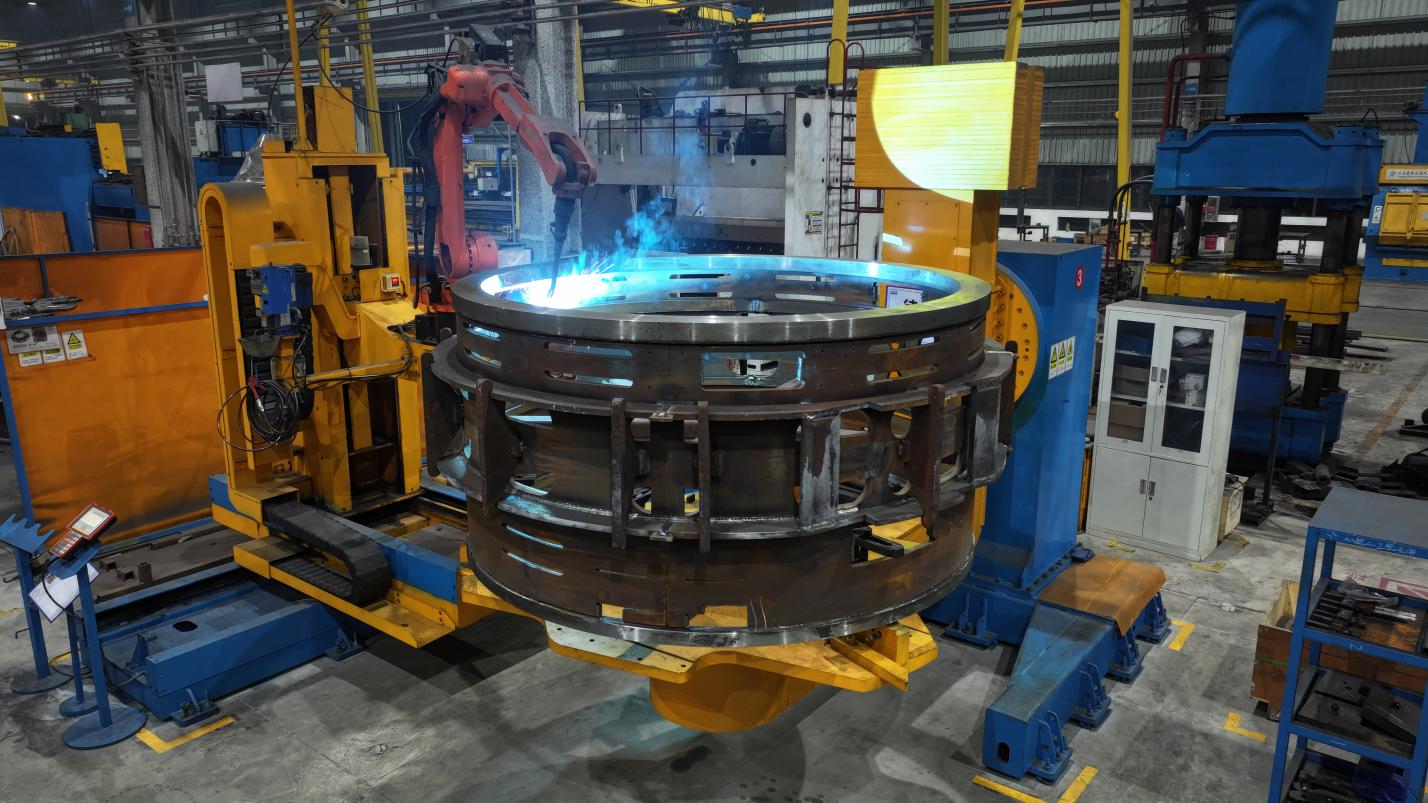
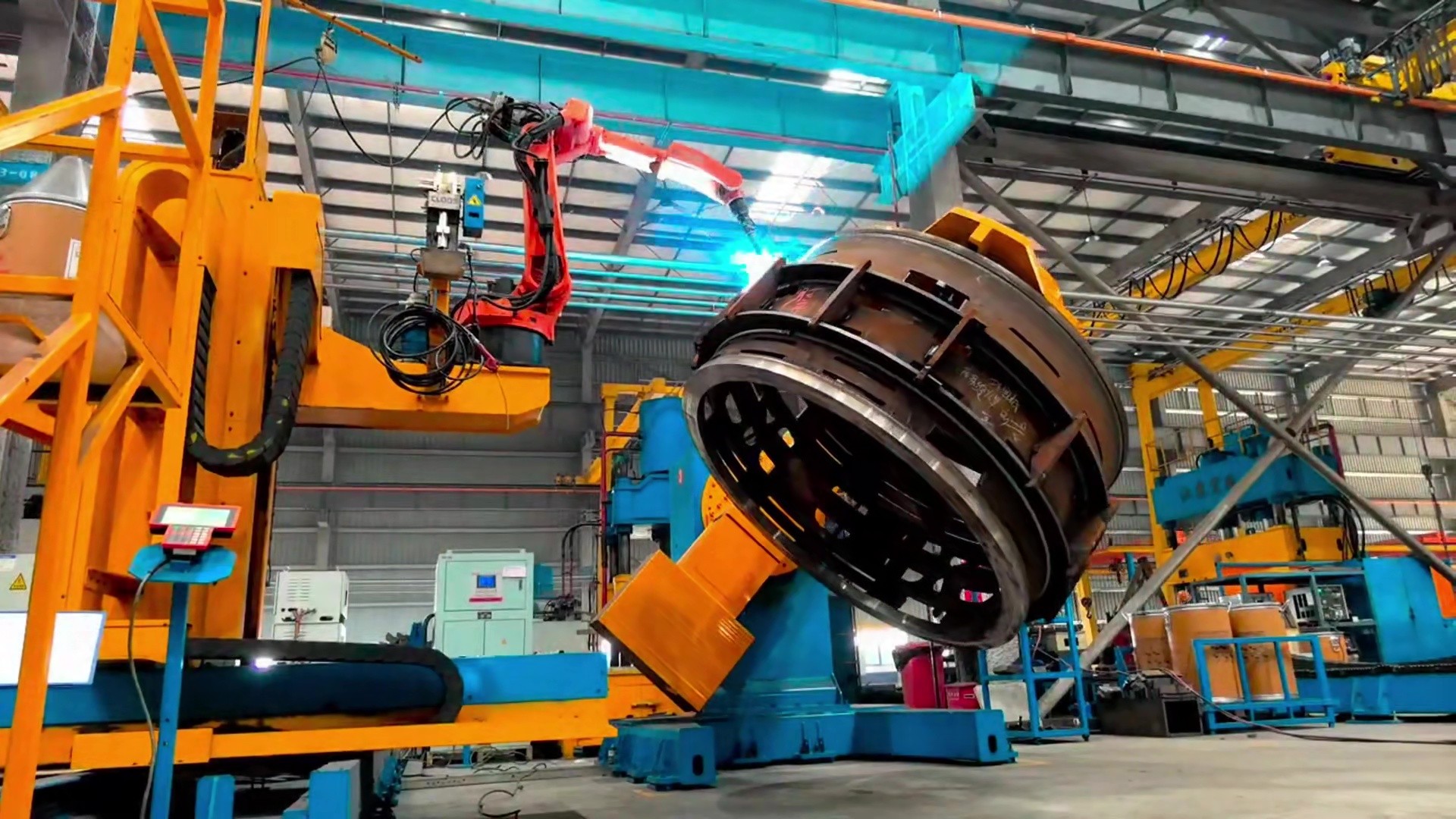
Secure in the process the quality that appearance cannot show.
Stator and rotor welding can be judged against inspection standards for internal quality that visual checks cannot confirm—lack of fusion, root defects, and interpass quality. Treating inspection criteria as process-design requirements—not only as post-weld checks—is the starting point when assessing automation.
- Confirm inspection standards (including UT) and acceptance criteria
- Manage groove geometry and root region, plus heat input and interpass temperature
- Set welding parameters and validate welding through trials
Related reading: Quality confirmation including ultrasonic testing (UT)
Assess as cell or line from workpiece conditions.
Stator and rotor welding automation is assessed as a Robotic Welding Cell or a Robotic Welding Line. Handling of large, heavy workpieces and production volume determine how the layout splits.
- Positioning and flipping of large workpieces, plus positioner and fixture design
- Response to joint-location variation (touch sensing and arc sensing)
- Robot layout selection matched to weld attitude and access
- End-to-end process design from trials and weld validation through startup
Related technology: Touch sensing & arc sensing · Trials & weld validation
Discuss stator & rotor welding
Drawings, thickness, and inspection-standard data for the target parts help the first assessment move faster.
Request a Technical Assessment